|
|
Books by and about 2020 presidential candidates |
|
Crippled America,
by Donald J. Trump (2015) |
United,
by Cory Booker (2016) |
The Truths We Hold,
by Kamala Harris (2019) |
Smart on Crime,
by Kamala Harris (2010) |
Guide to Political Revolution,
by Bernie Sanders (2017) |
Where We Go From Here,
by Bernie Sanders (2018) |
Promise Me, Dad ,
by Joe Biden (2017) |
Conscience of a Conservative,
by Jeff Flake (2017) |
Two Paths,
by Gov. John Kasich (2017) |
Every Other Monday,
by Rep. John Kasich (2010) |
Courage is Contagious,
by John Kasich (1998) |
Shortest Way Home,
by Pete Buttigieg (2019) |
The Book of Joe ,
by Jeff Wilser (2019; biography of Joe Biden) |
Becoming,
by Michelle Obama (2018) |
Our Revolution,
by Bernie Sanders (2016) |
This Fight Is Our Fight,
by Elizabeth Warren (2017) |
Higher Loyalty,
by James Comey (2018) |
The Making of Donald Trump,
by David Cay Johnston (2017) |
|
Books by and about the 2016 presidential election |
|
What Happened ,
by Hillary Clinton (2017) |
Higher Loyalty ,
by James Comey (2018) |
Trump vs. Hillary On The Issues ,
by Jesse Gordon (2016) |
Hard Choices,
by Hillary Clinton (2014) |
Becoming ,
by Michelle Obama (2018) |
Outsider in the White House,
by Bernie Sanders (2015) |
|
|
Book Reviews |
(from Amazon.com) |
(click a book cover for a review or other books by or about the presidency from Amazon.com)
|
The Tea Party Goes to Washington
by Rand Paul
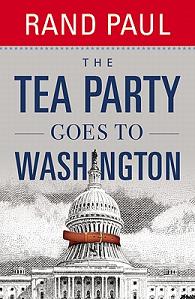
(Click for Amazon book review)
BOOK REVIEW by OnTheIssues.org:
This book is Rand Paul's autobiography and memoir of his Senate race in 2010. But it's also an important contribution to understanding the Tea Party. We read this book, in part, with Paul as a Tea Party spokesperson instead of just writing about his own politics.
Sen. Paul claims (p. 86-88) that he was the first Tea Party candidate to win a statewide race. Well, that's an exciting statement, but only true if one looks at it in just the right way. Mike Lee was elected statewide in Utah on the same night, but one time zone west of Paul's Kentucky, so technically Paul was first. Marco Rubio was also elected statewide in Florida on the same night, and in the same pair of time zones, but the polls in Florida closed later than those in Kentucky, so again Paul is technically correct. Scott Brown was elected statewide in Massachusetts months earlier, in an important Tea Party victory, but Sen. Brown does not claim the Tea Party mantle for himself. Nevertheless, Sen. Paul is an important national voice of the Tea Party movement.
So what does Rand Paul believe as Tea Party spokesperson? And more importantly, what does the Tea Party "believe", if one can attribute issue stances to a grassroots organization? Paul hated George W. Bush (p. 52), characterizing his presidency as spendthrift and warmongering; clearly most Tea Party members agree with that. Paul still hated Bush when McCain ran for president in 2008 (p. 82), and his anti-Bush feelings rubbed off onto McCain electorally. That implies that the only reason McCain didn't fare even worse in the 2008 election is that he picked the Tea Party darling Sarah Palin as his running mate, and got SOME Tea Party votes as a result. Mostly Paul hates the neoconservatives (p. 150) who dominated Bush's cabinet, and says the Tea Party hates the neocons too.
Hence Sen. Paul positions the Tea Party as part of the split in the Republican Party between the neocons and the libertarians, claiming the Tea Party is on the libertarian side. The key distinction in that split is whether one believes in a massive defense buildup: the neocons do; the libertarians don't. That distinction does not necessarily apply to the majority of the Tea Party, however: Sarah Palin (who endorsed Sen. Paul, p. 78) would build up the military; so would Sens. Lee, Brown, and Rubio, three Tea Party Senators. The key vote that would occur is whether to accept military cuts as part of a big budget cut package: Paul would certainly vote yes; those other senators MIGHT vote yes, unlike neocon Senators (like McCain) who would certainly vote no.
So is Sen. Paul wrong? Well, we consider his opinion more like "guidance" for where he'd LIKE the Tea Party to go. Of course some Tea Partiers do support military cuts, especially as part of a budget cut package. But we do think Paul has transferred his own view onto the Tea Party. Why would he do that? Let me illustrate with an interview I conducted with David Walker, the former Comptroller General of the United States. The purpose of the interview was to ascertain Walker's issue stances for our VoteMatch quiz; after an hour-long verbal interview, I wrote up my interpretation of his answers to our 20-question quiz. Upon Walker's review, we determined that I had interpreted 3 out of 20 incorrectly -- and in all three cases, I transferred my own viewpoint onto Mr. Walker. It's not that I'm a bad interviewer -- that's human nature -- we interpret what we want to hear. I think Sen. Paul has done the same with the Tea Party's stance on military cuts -- Sen. Paul believes in military cuts, and assumes that the Tea Party believes the same. But my editing process corrected my personal misinterpretations of David Walker's positions -- there is no editing process for the Tea Party movement, so we'll have to wait and see if others agree with Sen. Paul or not.
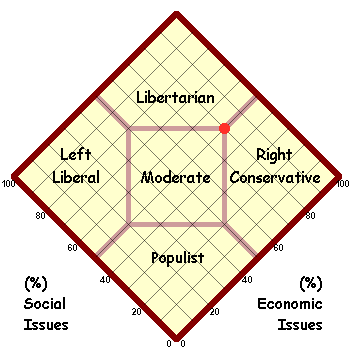
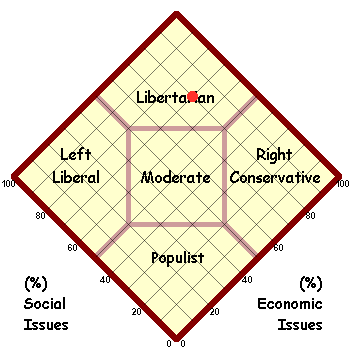
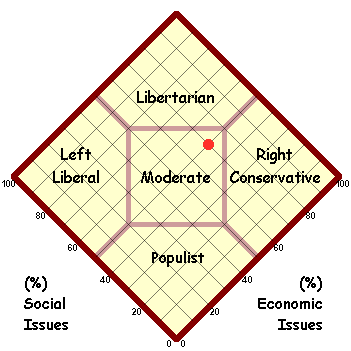
That begs the question about whether Sen. Paul is a libertarian or not. He notes (p. 78) that his OPPONENTS call him a libertarian, but that he's pro-life, anti-gay-marriage, and several other stances that are counter to libertarian ideals. He is the son of Rep. Ron Paul, the libertarian standard-bearer for many years now, so many people assume that Rand Paul is just as libertarian as his father. One can see an overview by observing our VoteMatch table for the two of them side-by-side:
Both count as libertarian by our VoteMatch labeling; certainly Ron Paul is MORE libertarian, but Rand Paul can claim that also. We include in the VoteMatch analysis our still-growing Tea Party summary; they're placed just about where Rand Paul is, but with different reasons behind it.
-- Jesse Gordon, OnTheIssues editor-in-chief, July 2012
| OnTheIssues.org excerpts: (click on issues for details)
|
Abortion
Rand Paul: My opponents call me libertarian but I'm pro-life.
|
Budget & Economy
Robert Bennet: Targeted in primary because he voted for bank bailout.
Rand Paul: Government not serious about controlling spending.
Rand Paul: Bank bailout represented everything wrong with Washington.
Rand Paul: Larger government is not a solution for economy.
|
Foreign Policy
Joseph Lieberman: Questioned his own party's foreign policy; then left party.
Rand Paul: As only democracy in Mideast, Israel is important ally.
|
Government Reform
George W. Bush: OpEd: Doubled national debt & doubled size of government.
George W. Bush: OpEd: Activist government for conservative ends.
Rand Paul: Conservatives should criticize GOP when they grow government.
Rand Paul: Instead of bringing home the bacon, bring home politicians.
Rand Paul: Federal contracts should include no-PAC clauses.
Ron Paul: Lobbyists shouldn't see bills before Congressmen.
|
Gun Control
Rand Paul: Patriot Act violates your gun rights.
|
Homeland Security
Bobby Scott: No one had a chance to read the PATRIOT Act; just a mad dash.
John Conyers: PATRIOT Act lacked integrity: late-night debate with no text.
Rand Paul: Defense should be largest part of much smaller budget.
Rand Paul: How much of what is spent on defense is actual "defense"?
Rand Paul: The Patriot Act is intrusive; it's what the Founders feared.
Rand Paul: Put defense spending on the table for reducing budget.
|
Principles & Values
Mike Lee: With Tea Party backing, beat incumbent in GOP Senate primary.
Tea Party: 2010:Knocked off establishment picks in GOP Senate primaries.
Barack Obama: OpEd: seeks newer New Deals and greater Great Societies.
Nancy Pelosi: Tea Party is high-end funded: AstroTurf, not grassroots.
Rand Paul: My victory was part of a much larger Tea Party movement.
Rand Paul: Being Ron Paul's son means being unique-minded independent.
Rand Paul: Met Wife Kelley at age 26 in Atlanta.
Rand Paul: Wife Kelley gave Randal Paul his nickname "Rand".
Rand Paul: Moved to wife's home in Kentucky & raised three boys.
Ron Paul: Freedom brings people together.
Ron Paul: Since 1984, a one-man Tea Party.
Ron Paul: 1984: unsuccessful bid for US Senate.
Ron Paul: 1976: Head of GOP convention Texas delegation for Reagan.
Ronald Reagan: 1976: Considered outside of mainstream Republican Party.
Ronald Reagan: Tea Party too extreme for Reagan? No, he did radical things.
Tea Party: Original 1773 Tea Party fought ruling establishment also.
Tea Party: More Americans identify with Tea Party than Dems or GOP.
Tea Party: Unconventional because they've had enough of establishment.
Tea Party: No national organization speaks for the Tea Party.
|
Social Security
Rand Paul: Raise the retirement age to deal with Baby Boomers.
|
Tax Reform
Rand Paul: Joe Taxpayer gets stuck with the bill for budget deficit.
Rand Paul: Opposed to increasing taxes during recession.
|
War & Peace
Rand Paul: Opposed to Iraq War; no direct threat & no declared war.
|
The above quotations are from The Tea Party Goes to Washington
by Rand Paul.
Books about the Tea Party Movement:
- America the Beautiful, by Dr. Ben Carson, 2012
- The Second American Revolution, by the Tea Party Patriots, 2012
- The Remaking of Republican Conservatism, by Theda Skocpol & Vanessa Williamson, 2012
- An American Son, by Marco Rubio, 2012
- The Rise of Marco Rubio, by Manuel Rogi-Franzia, 2012
- The Tea Party: A Brief History, by Ronald Formisano, 2012
- Michele Bachmann: Why She Will Win, by Ron Paul Jones, 2011
- Core of Conviction, by Rep. Michele Bachmann, 2011
- Take the Risk, by Dr. Ben Carson, 2007
- The FairTax Book, by Rep. John Linder, 2006
- Give Us Liberty: A Tea Party Manifesto, by Rep. Dick Armey
- Troublemaker, by Christine O`Donnell
- The Tea Party Goes to Washington, by Sen. Rand Paul
- The Freedom Agenda, by Sen. Mike Lee
- Now Or Never, by Sen. Jim DeMint
|
|
|
Page last edited: Feb 25, 2019
|